Redesigning the employee intranet
Client
Ausgrid
Agency
Designit, 2023
Role
Senior Experience Designer
Overview
Ausgrid is the largest electricity distributor on Australia’s east coast, serving 1.8 million customers in New South Wales. Their extensive network includes residential, commercial, essential services, local councils and more.
―
Impact
—
The Challenge
In analysing the current state of the employee experience at Ausgrid, a significant portion of survey feedback highlighted user experience issues with the current intranet. Employees reported difficulty in navigating, searching for information and completing administrative tasks.
Designit was engaged to conduct research with employees to understand the current challenges of the intranet, with the key objective of defining the intranet’s future user experience.
Ausgrid’s ultimate goal is to develop a centralised hub that equips employees with all essential information required to carry out their roles effectively.
This project has been instrumental in elevating Ausgrid’s intranet user experience.
Our wireframe designs and strategic recommendations have empowered Ausgrid to implement UX improvements systematically.
By focusing on human-centric design principles, we helped Ausgrid enhance productivity and foster a more positive employee experience.
This initiative marks a significant step forward in Ausgrid’s ongoing efforts to cultivate a streamlined and user-friendly digital workplace environment.
The Approach
We worked closely with Employee Engagement leaders to understand the problem context and engage in collaborative research activities with employees.
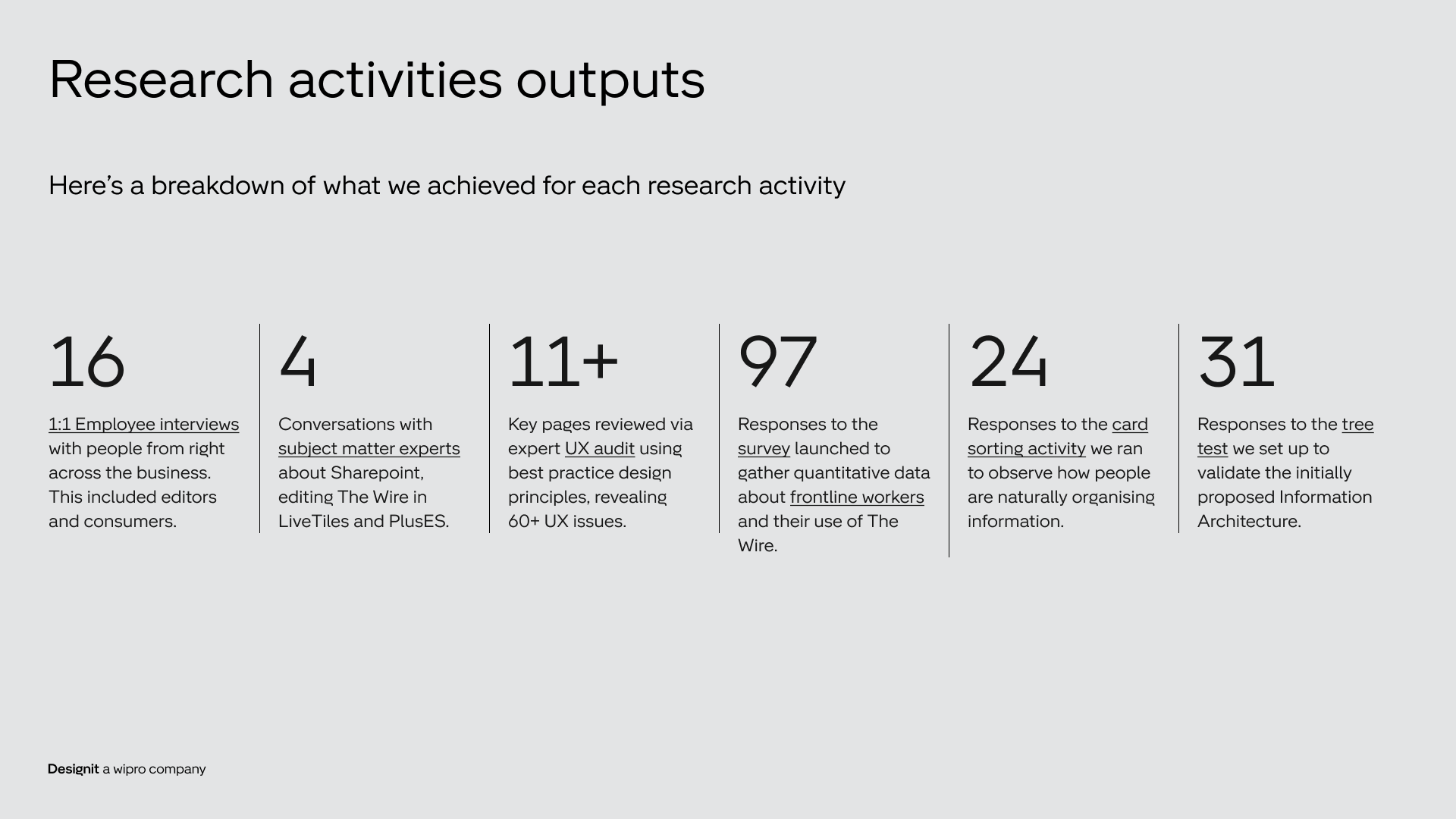
Through 1:1 interviews and a comprehensive UX audit, we identified pain points and usability issues within the existing intranet. Utilising complementary research methods such as card sorting and tree testing, we explored and validated a new Information Architecture.
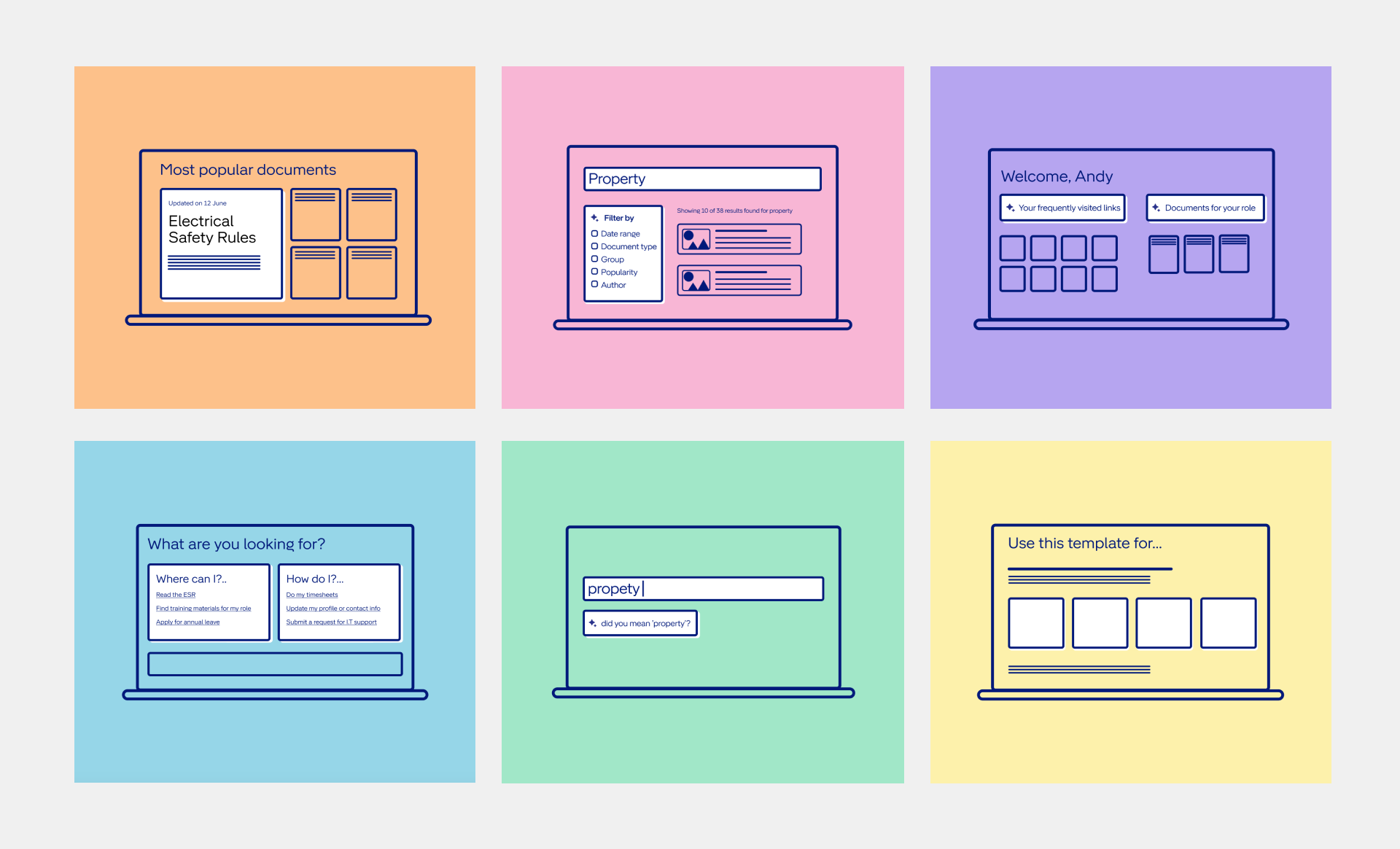
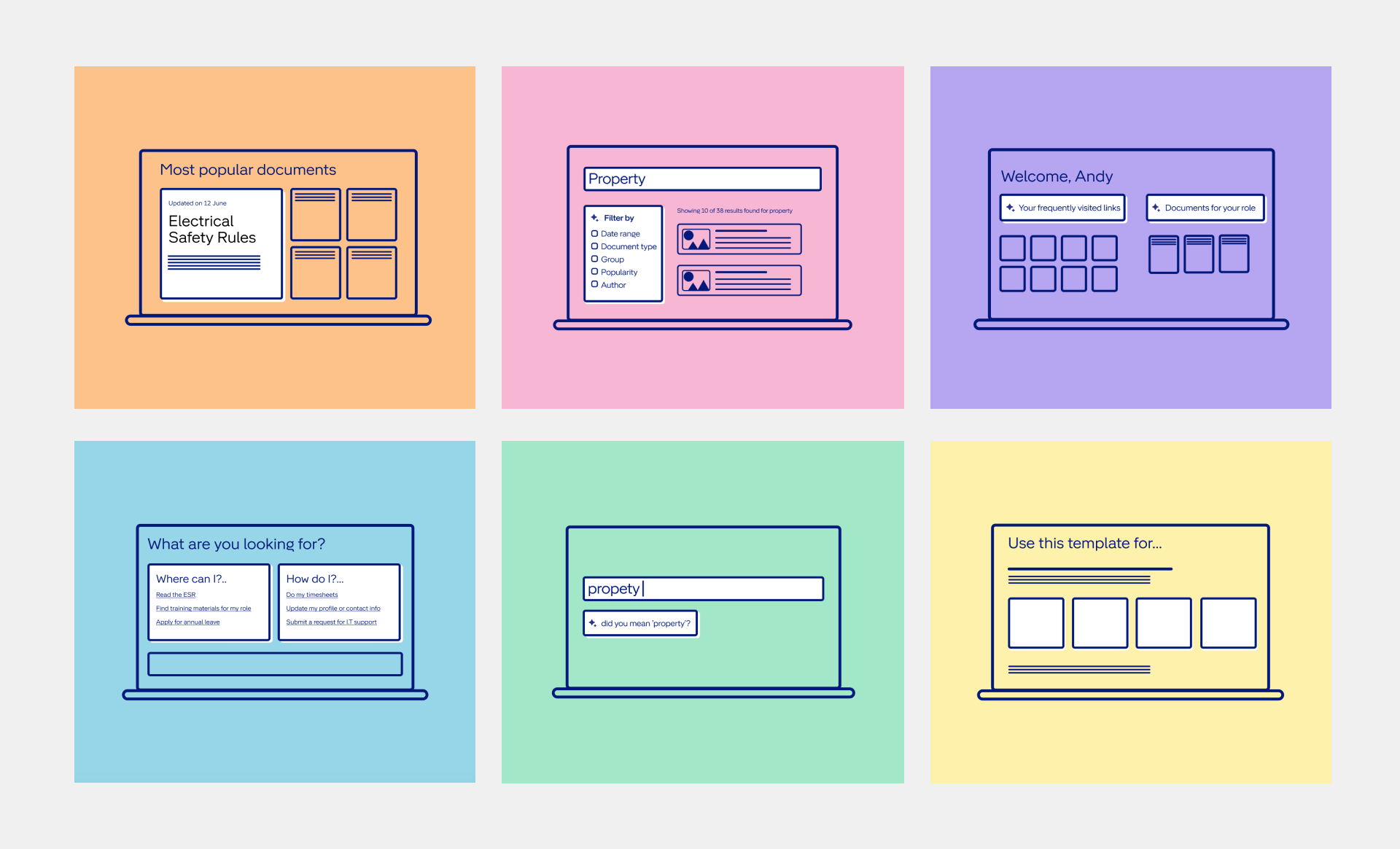
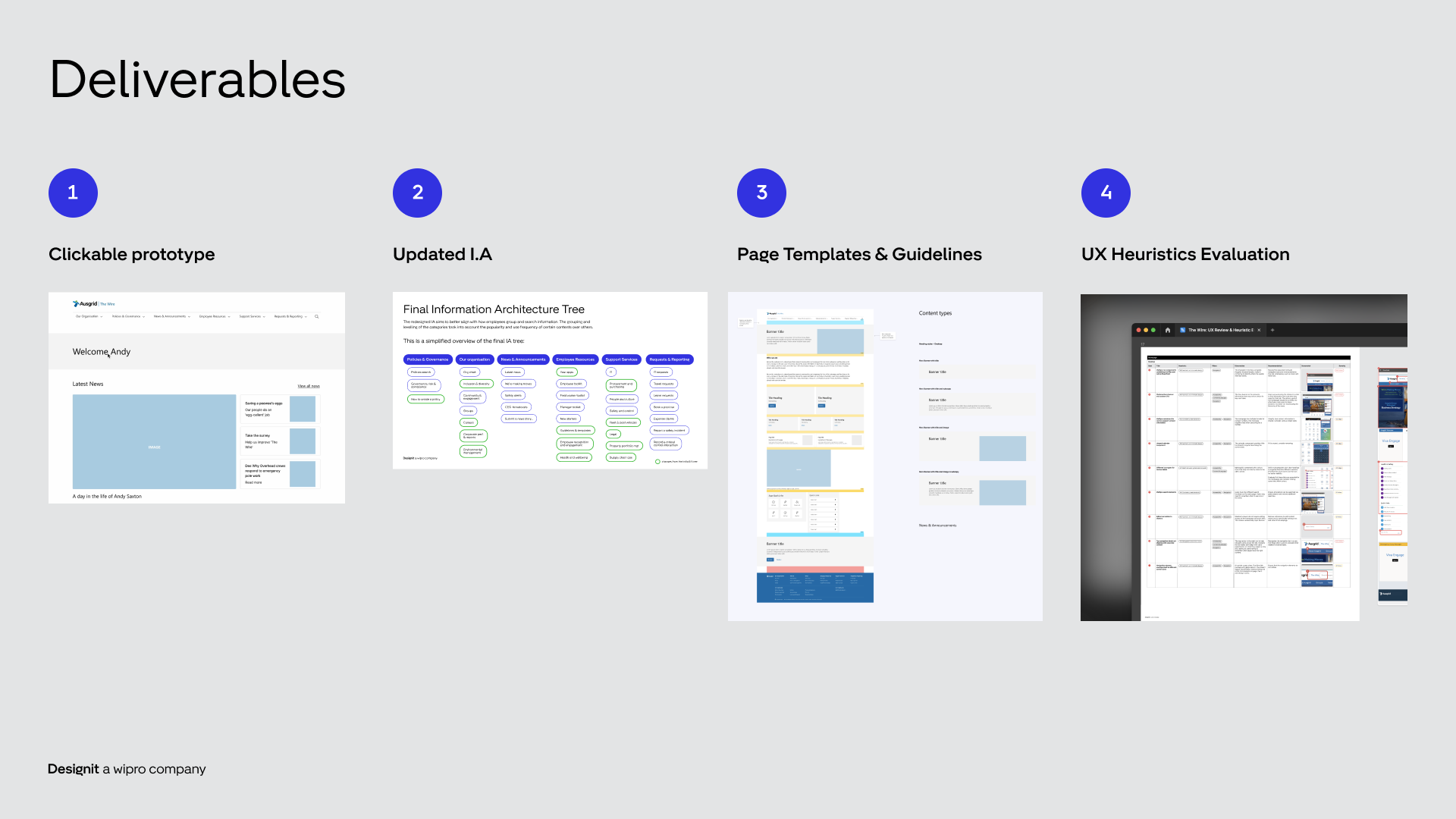
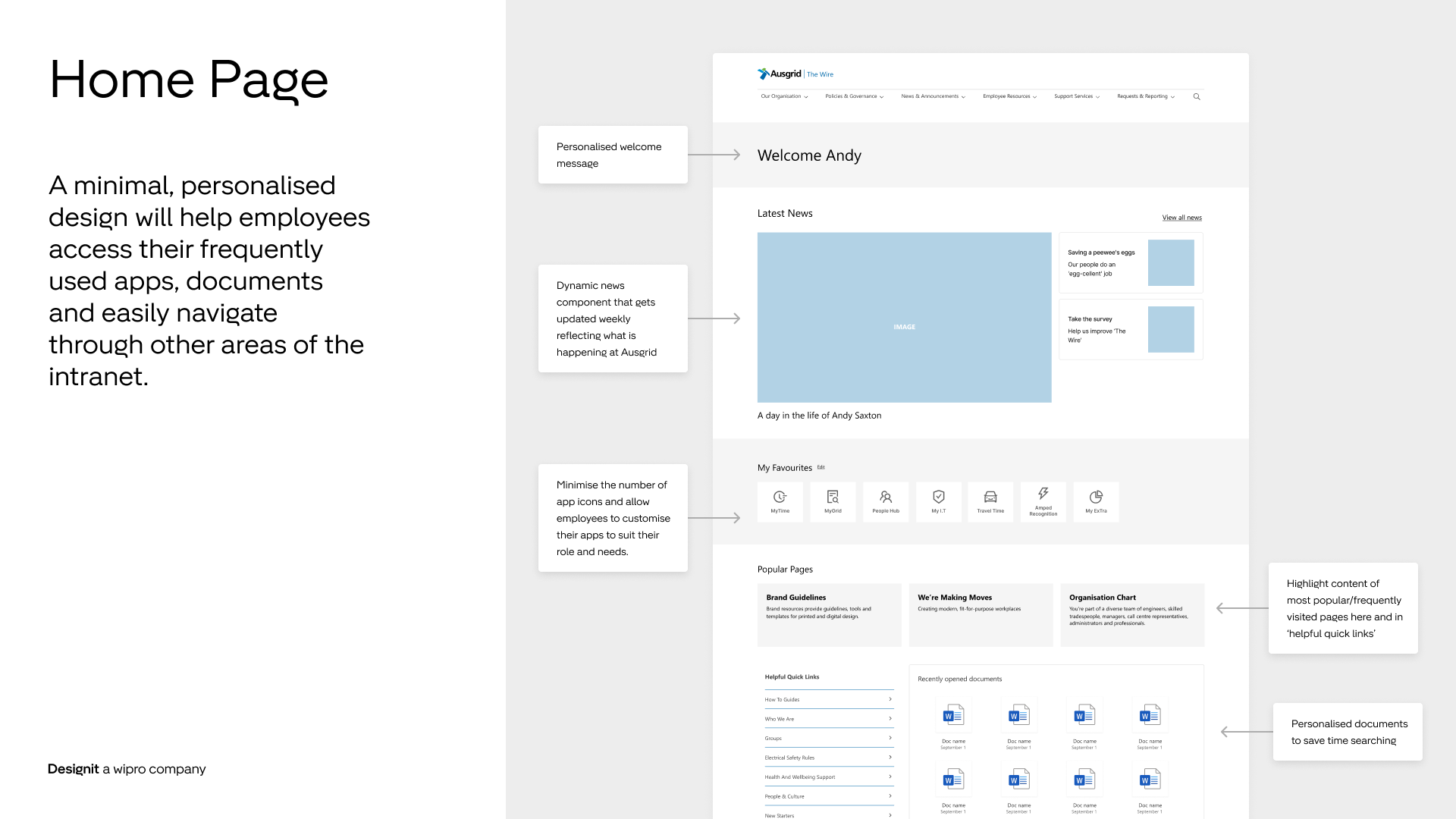
To showcase the envisioned user experience of The Wire, we designed a set of page templates, a navigation system and search features which were integrated into an interactive prototype.
Card Sorting
Tree Testing
Card Sorting
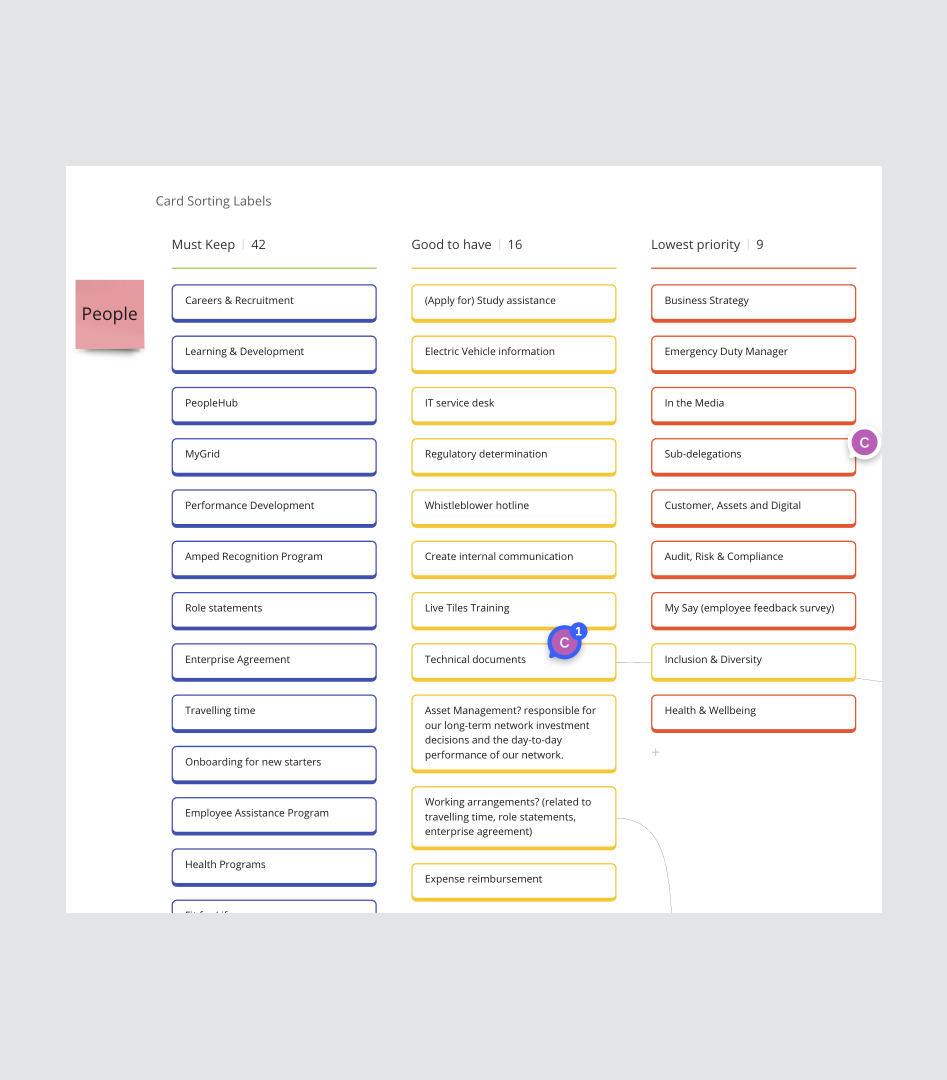
We used open card sorting to start from a blank canvas and broaden our insights into users’ mental models. After our interviews, we realised we needed to use the employee’s knowledge to help us redesign the IA. It was too complex and niche for us to create the labels. We set up 42 cards based on our interview findings and Google Analytics data, we prioritised labels that referred to highly mentioned tasks, pages that were high traffic, covering themes across all the current categories.
Card Sorting Learning
Participants categorised information based on the following criteria:
Informational versus task-led content types
Organisational versus personal relevance
Frequency of use
Tree Testing
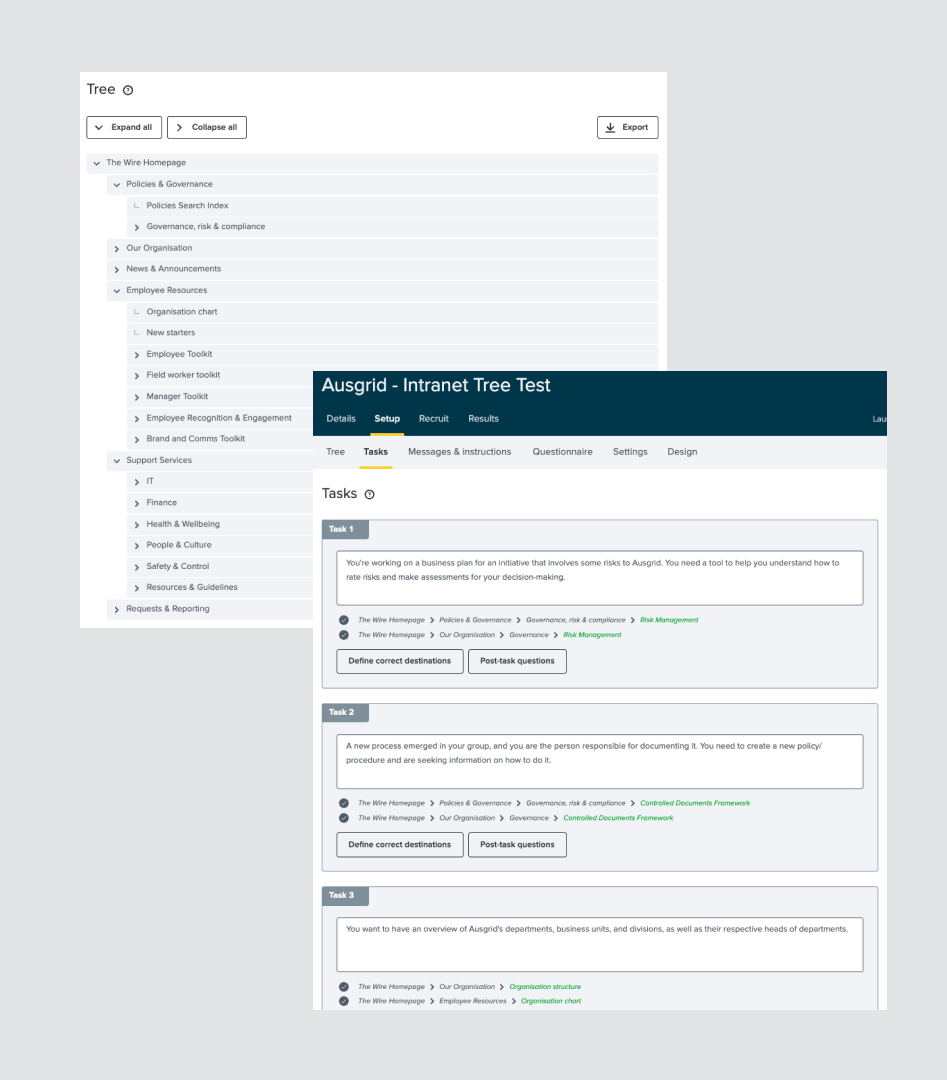
We validated our initial Information Architecture using tree testing.
Planning the test also came packed with challenges:
The tasks were hard to write because of how specific the content is
Not all tasks were relevant to the participant’s role
We aimed to have questions covering all categories created
We targeted popular actions and high-traffic pages for the tasks
We intentionally put forward questions covering content categorisation that we were uncertain about what we were proposing
Tree Testing Learnings
The most significant insights of the tree test were taken from the task-by-task analysis. By drilling down on each task’s data we were able to iterate on groupings and labelling of sub-categories that didn’t perform as well as others.
Key Learnings
Defining deliverables and value early on
The term "mid-fidelity" often led to confusion. Working in the 'mid-fi' space felt ambiguous, as we couldn't push the work clearly in either direction. The project's complexity required more in-depth research than the timeline permitted. Towards the end, we lacked a clear guiding vision, or 'north star', to direct our efforts. Additionally, we recognized the importance of being vulnerable and transparent with our clients throughout the process.
Remote working & intentional collaboration
How do you avoid team silos in remote work? One approach is to prioritise intentional time together. We discussed scheduling more purposeful meetings, using timeboxing to keep them efficient, and creating dedicated periods for collaboration. This extends to our interactions with clients, where making an effort to present and collaborate in person could also enhance our connection and effectiveness.