Designing the experience before the space
Organisation
Deakin University, 2026
Role
Senior Experience Designer

Overview
Defining the future experience of Deakin University Student Association (DUSA) shared space, grounded in qualitative research that reflects student and staff needs.
―
Impact
—
The Deakin University Student Association (DUSA) is an independent not-for-profit, student-run organisation that represents and supports students. DUSA staff and student activities at Deakin’s Burwood Campus were divided between two buildings. This project proposed to relocate and integrate these operations into one building in the middle of campus.
The plan to relocate DUSA into a single, central location presented an opportunity to reimagine its physical presence in a way that better reflected the needs, identity, and spirit of the student and staff community it serves.
We created a comprehensive research report that captures the aspirations and practical requirements for the new DUSA space, mapping both student and staff educational, emotional, functional, and social needs. It provided key stakeholders and architects with a solid foundation for decision-making and to initiate the building design phase.
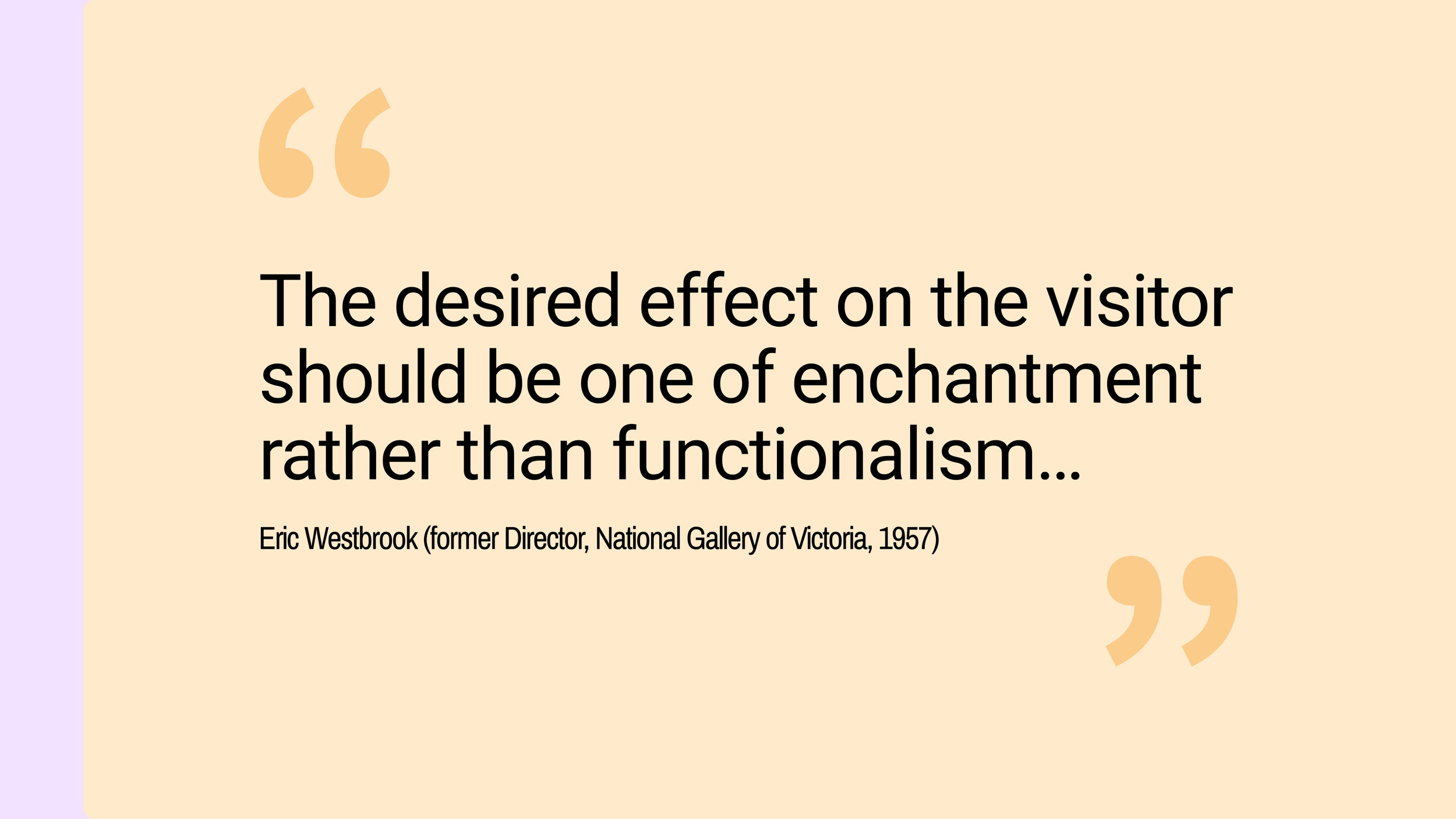
This quote from Eric Westbrook (former Director, National Gallery of Victoria, 1957) served as a guiding principle throughout the research process. The full quote is "the desired effect of the visitor should be one of enchantment rather than functionalism and that before dealing with the physical requirements of a building an attempt should be made to state it's general purpose, the character or spirit of the space"
The Approach
At the core of placemaking as a philosophy is the belief that communities are the experts of the places they live, work and play. Places have the power to facilitate connection. They can engage, inspire, and stimulate.
This is where a really beautiful overlap of digital and infrastructure disciplines can overlap, when we begin to think about places not just as physical environments, but as services or experiences, we can apply human-centered design principles to their creation.
To ensure the success of the new DUSA space, we took a human-centered approach to gain a deeper understanding of students' and staff needs, behaviours, and emotional experiences.
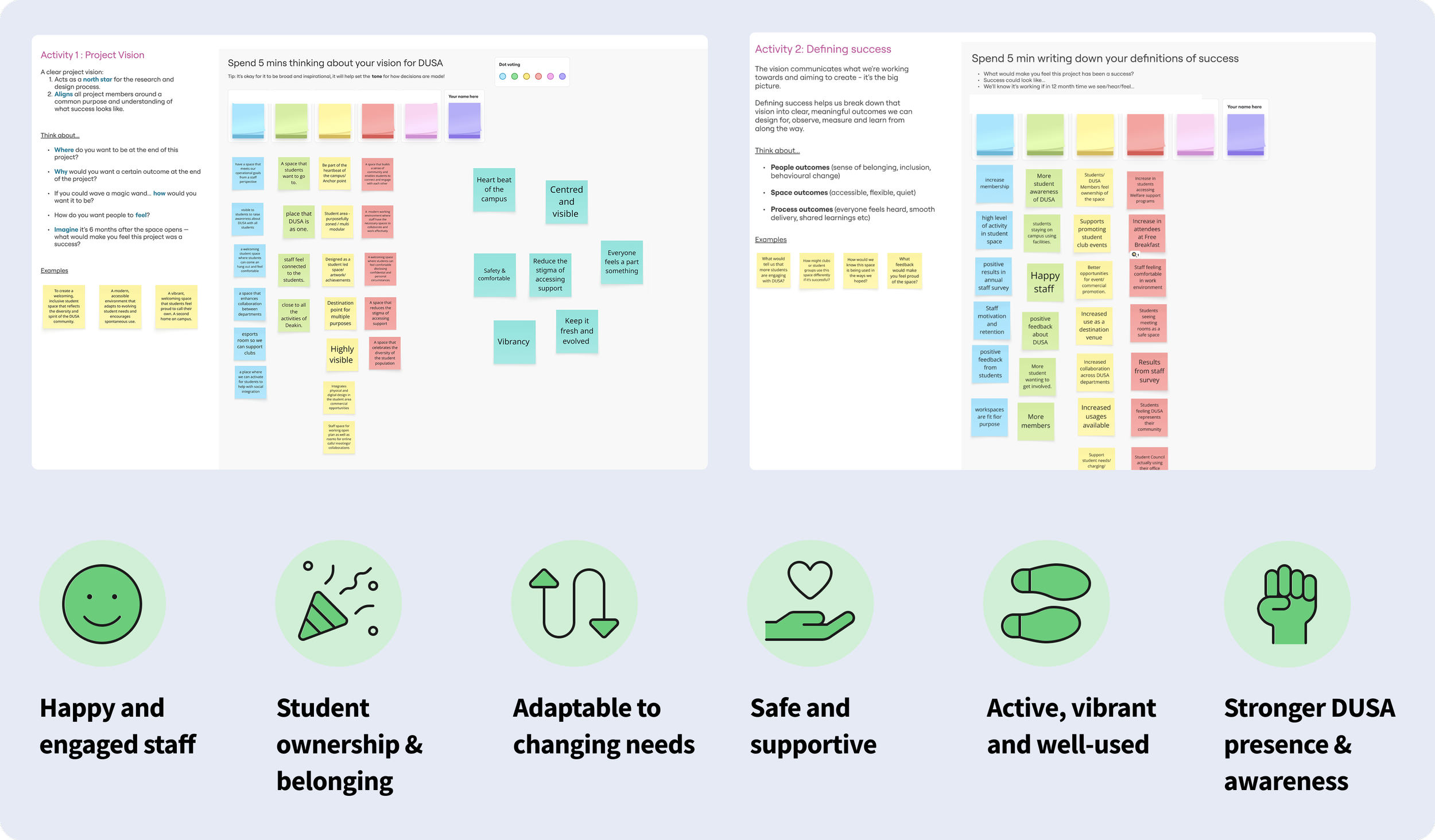
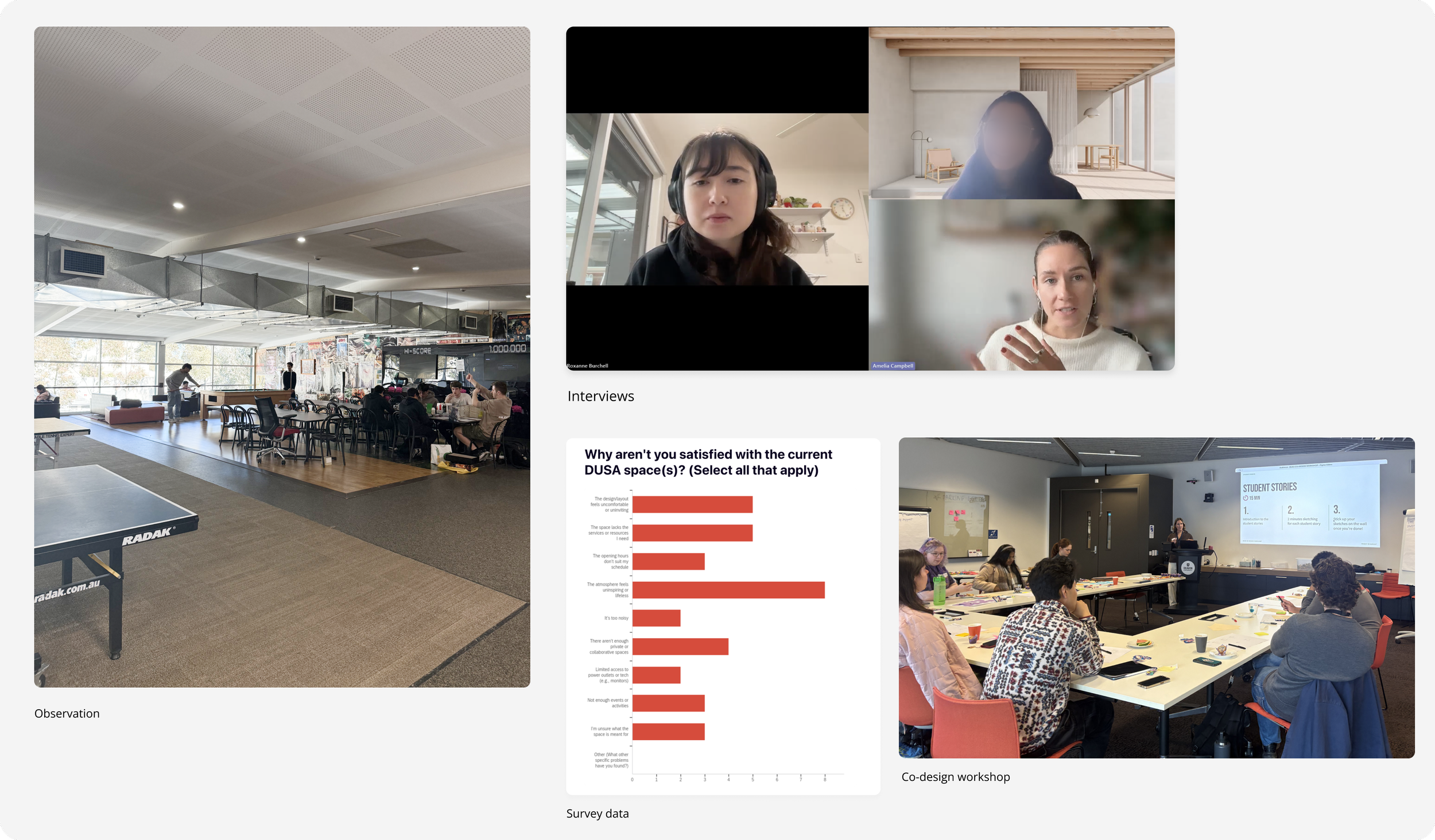
To kick off our discovery phase, we collaborated with DUSA managers in an online workshop to create a shared project vision and define measures of success. Over two weeks we immersed ourselves in DUSA’s spaces and student events, gaining first-hand insight into daily use. Our mixed-methods research combined surveys and in-depth interviews to explore lived experiences, needs, and pain points of both students and staff.
Building on the findings from surveys and interviews, we ran a three-hour co-design workshop where students imagined the future of DUSA’s shared spaces. Participants shared stories, generated ideas, and then sketched or modelled concepts for ideal shared spaces, while being prompted them to think about purpose, feelings, features and layouts.
Creating measures of success
Research methods
Research Methods
Over two weeks we immersed ourselves in DUSA’s spaces and student events, gaining first-hand insight into daily use and helped us to build empathy and uncover nuances. Our mixed-methods research combined surveys and in-depth interviews to explore lived experiences, needs, and pain points of both students and staff.
We aimed to get a diverse mix of students to capture different perspectives so studying a broad range of courses, at varying points in their degrees, some live on campus, some study completely online, varying cultural backgrounds and genders. and from DUSA we spoke to people from Finance, student engagement, advocacy, marketing, events.
Key Learnings
Defining deliverables and value early on
The term "mid-fidelity" often led to confusion. Working in the 'mid-fi' space felt ambiguous, as we couldn't push the work clearly in either direction. The project's complexity required more in-depth research than the timeline permitted. Towards the end, we lacked a clear guiding vision, or 'north star', to direct our efforts. Additionally, we recognized the importance of being vulnerable and transparent with our clients throughout the process.
Remote working & intentional collaboration
How do you avoid team silos in remote work? One approach is to prioritise intentional time together. We discussed scheduling more purposeful meetings, using timeboxing to keep them efficient, and creating dedicated periods for collaboration. This extends to our interactions with clients, where making an effort to present and collaborate in person could also enhance our connection and effectiveness.